

Understanding Childhood Trauma
Understanding Childhood Trauma
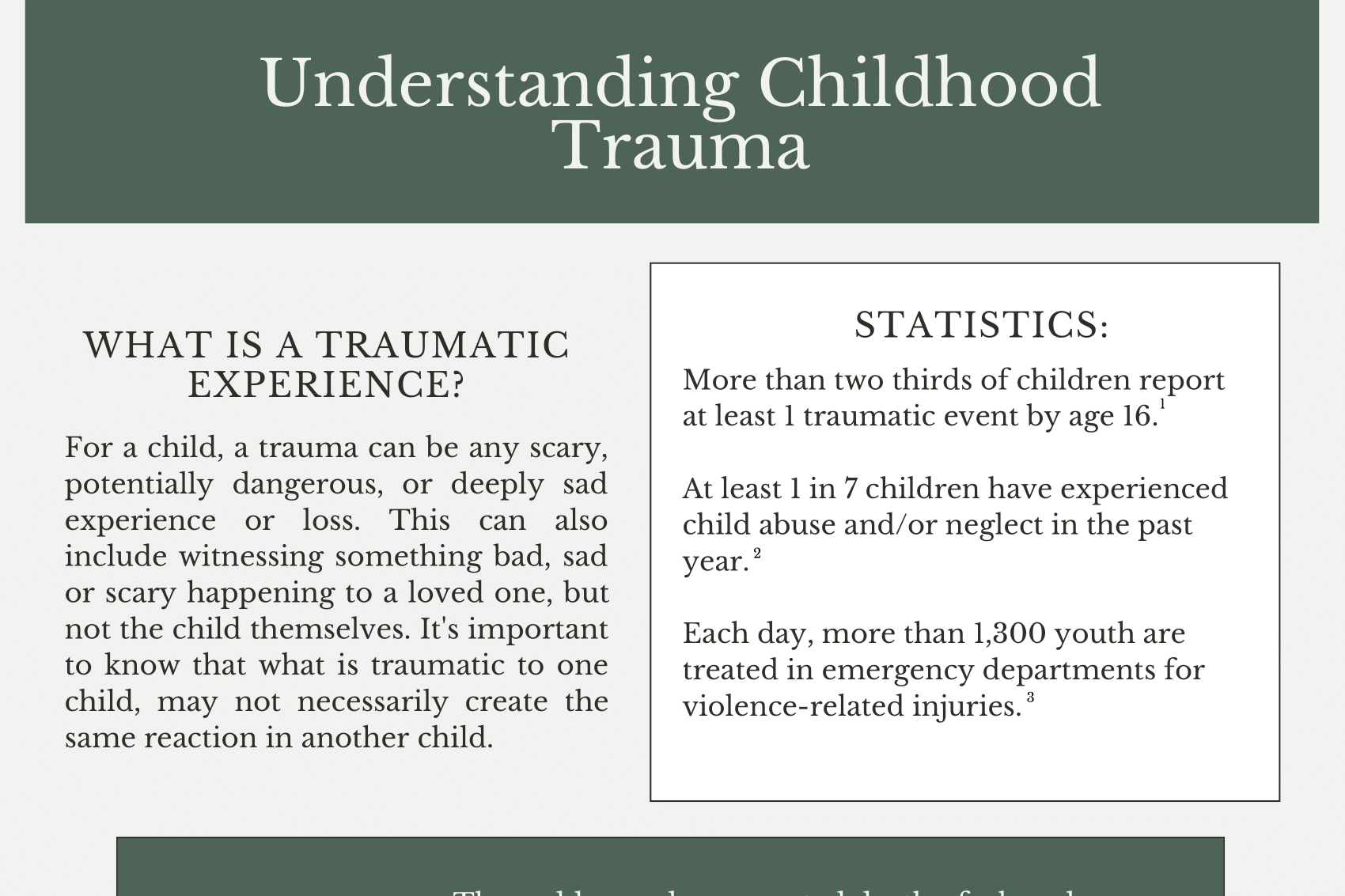
WHAT IS A TRAUMATIC EXPERIENCE?
For a child, a trauma can be any scary, potentially dangerous, or deeply sad experience or loss. This can also include witnessing something bad, sad or scary happening to a loved one, but not the child themselves. It's important to know that what is traumatic to one child, may not necessarily create the same reaction in another child.
STATISTICS:
More than two-thirds of children report at least 1 traumatic event by age 16.
At least 1 in 7 children have experienced child abuse and/or neglect in the past year.
Each day, more than 1,300 youth are treated in emergency departments for violence-related injuries.
WHAT EVENTS COULD BE TRAUMATIC FOR KIDS AND TEENS?
The sudden and unexpected death of a loved one.
Prolonged bullying.
Witnessing community violence.
The substance use disorder of a caregiver.
Serious or life-threatening accidents or illness.
Natural disasters that threaten someone’s home or life.
Abuse (physical, sexual, psychological abuse or neglect).
Physical or sexual assault. Separation from a caregiver.
Racism or discrimination based on identity.
Covid-19-related isolation.
WHAT ARE TRAUMA REACTIONS?
Trauma reactions are emotional, mental, physical and behavioral responses that continue after the event itself has ended. For some children, these symptoms may resolve on their own. When they do not, we call this impact traumatic stress.
FOR CHILDREN, THIS MIGHT LOOK LIKE:
EMOTIONAL
Increased feelings of: Anger; Irritability; Sadness; Guilt; Shame; Confusion.
Emotional Numbness
Difficulty feeling positive feelings like happiness or love
Rapid changes in emotion.
MENTAL
Difficulty concentrating.
Unwanted and persistent memories of the event.
Believing that what happened was their fault.
Feeling as if the event were happening again (i.e. having “flashbacks”).
PHYSICAL
Sleep disturbances (nightmares/difficulty falling or staying asleep).
Increased jumpiness/startle response.
Headaches, stomachaches, or other physical complaints.
Developmental regression (i.e. bedwetting after being potty trained, etc.)
BEHAVIORAL
Isolating from friends/family.
Avoiding people/places/ conversations that might remind them of the event.
Changes in grades.
No longer participating in things they used to enjoy.
Physical acting out. New,
high risk behaviors.
There are many ways for caregivers, families and community members to support children who experience a traumatic event.
CAREGIVERS AND TRUSTED ADULTS CAN SUPPORT CHILDREN BY:
Meeting immediate physical needs.
Talking with the child about what they are feeling and why.
Reminding them they are not responsible for what happened.
Providing day-to-day structure and routine.
Helping the child find coping skills that are safe, for when they feel overwhelmed.
Expecting and accepting rapid changes in emotion, mood and behavior.
Encouraging the expression of feelings through writing, dance, art, music, sports, community supports, etc.
COMMUNITY SUPPORTS:
Communities play a vital role in supporting children and families. This might look like:
Mentorship with trusted adults.
Meaningful recreational activities.
Activities that build cultural identity.
Spiritual groups.
Youth community engagement groups.
Positive experiences at school.
Supportive peer relationships.
Counseling/therapy.