

Kratom / 7-OH
Kratom comes from the leaves of the kratom tree, which is native to Southeast Asia. The leaf contains many chemical compounds, but people have isolated the ones that cause its psychoactive effects: 7-hydroxymitragynine (7-OH) and mitragynine.
In the United States, most products sold as kratom are actually artificially manufactured 7-OH products, which have much higher concentrations of the psychoactive ingredients than the plant naturally has. This higher concentration can put people who use it at increased risk of developing dependence, experiencing withdrawal from kratom/ 7-OH, and developing other side effects.
Most of the kratom/7-OH products sold in the United States are regulated or tested for safety. When you buy one of these products at a gas station, smoke shop, or other retailer, there is no way to know whether it contains what is advertised or is safe for human use.
What are kratom/ 7-OH’s effects and health risks?
At low doses, kratom has the effects of a stimulant – it can make users feel more awake, alert, or focused. At higher doses, it has the effect of an opioid and has been used to manage opioid withdrawal symptoms. The substances act on the same brain receptors as opioid drugs, which means that they can have similar effects, including sedation and depressed breathing.
High-potency 7-OH products, which are most of what is available in the United States, can cause health risks such as rapid heart rate, high blood pressure, and seizures.
Repeated use of kratom and 7-OH products can lead to physical dependence, and stopping can lead to symptoms similar to opioid withdrawal. Kratom withdrawal has not been studied extensively, but the documented cases show symptoms that are like opioid withdrawal, and include anxiety, depression, challenges sleeping, fatigue, restlessness, irritability, and body aches.
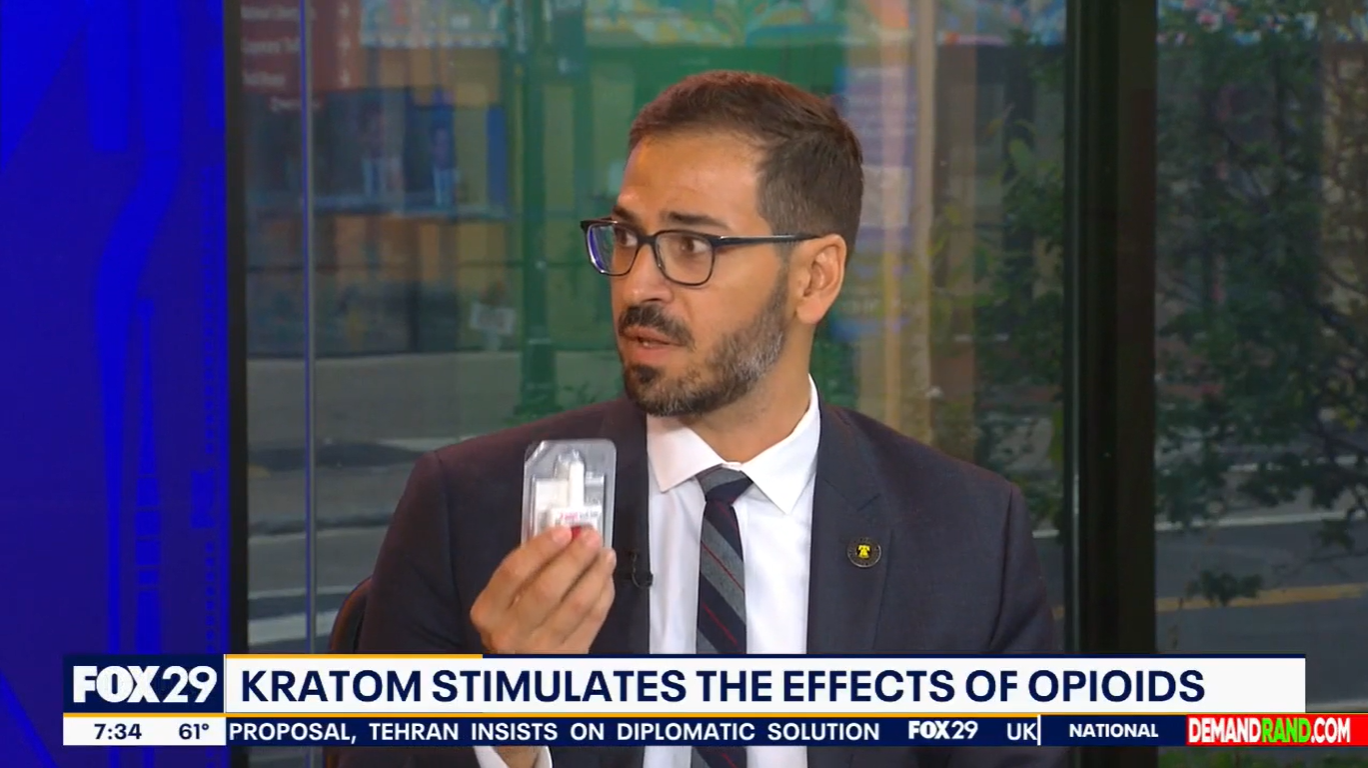
SUPHR Director Dr. Danny Teixeira da Silva was featured on Fox 29 to discuss the risks of Kratom/7-OH use. Story published Sept. 29, 2026.
Is Kratom / 7-OH legal in Pennsylvania?
As of September 2026, kratom is now defined by City law as an 'intoxicating substance.' In Philadelphia, businesses that sell kratom products now need a special permit, and any kratom products sold at those retailers have to be tested at a U.S. Drug Enforcement Administration (DEA)-licensed laboratory. It is now illegal to sell kratom products to any person under the age of 21.
There are efforts in the Pennsylvania state government to pass a law to require clear, accurate labeling of kratom products that include listing ingredients and safety concerns. The law would also prohibit sale of kratom products to anyone under the age of 21. The Pennsylvania Society of Addiction Medicine has published a letter of support for these efforts: HB 2058 and SB 899.
What is Kava, and how is it similar to and different from kratom?
Kava is a substance that comes from a shrub native to Southeast Asia. People have consumed the plant for its relaxing properties for a long time, especially during religious ceremonies. Kava has become more popular in the United States in recent years, where it’s often marketed as an alternative to alcohol.
Like alcohol, kava is a central nervous system depressant – it can make people feel relaxed and temporarily reduce anxiety. Also, like alcohol, consuming kava can have health risks.
Risky to combine with alcohol, anti-anxiety, and anti-depressant drugs
Some components of kava can also be toxic to the liver.
Like kratom and 7-OH products, kava products are not regulated in the U.S., and there is no way to verify exactly what you’re buying or how safe it is. There is a wide variety of kava plants, and some are more psychoactive than others, which can carry more risks to users.
References:
McCurdy CR, Sharma A, Smith KE, Veltri CA, Weiss ST, White CM, Grundmann O. An update on the clinical pharmacology of kratom: uses, abuse potential, and future considerations. Expert Rev Clin Pharmacol. 2024 Jan-Jun;17(2):131-142. doi: 10.1080/17512433.2024.2305798. Epub 2024 Jan 29. Erratum in: Expert Rev Clin Pharmacol. 2025 Dec;18(12):1107. doi: 10.1080/17512433.2025.2587541. PMID: 38217374; PMCID: PMC10846393.
United States Food and Drug Administration: 7-Hydroxymitragynine (7-OH): An Assessment of the Scientific Data and Toxicological Concerns Around an Emerging Opioid Threat